Why Perception Matters in Real Estate
When people think about real estate value, they often focus on measurable factors such as location, property size, condition, and market demand. However, there is another element that can significantly influence buying decisions: perception.
A property’s surroundings can shape how buyers feel about a neighborhood long before they compare prices or square meters. This is where the concept of neighborhood perceived value becomes particularly important.
Major venues such as Formula 1 circuits, stadiums, and large festival sites often generate strong opinions. Some people see them as vibrant hubs of activity and opportunity, while others associate them with noise, traffic, and overcrowding.
So, do these venues actually affect a neighborhood’s perceived value?
The answer is not always straightforward.
How Major Venues Can Influence Neighborhood Perceived Value
Large event venues often become defining features of the areas around them. Whether it is a Formula 1 circuit, a football stadium, or a music festival venue, these landmarks can shape how people perceive an entire neighborhood.
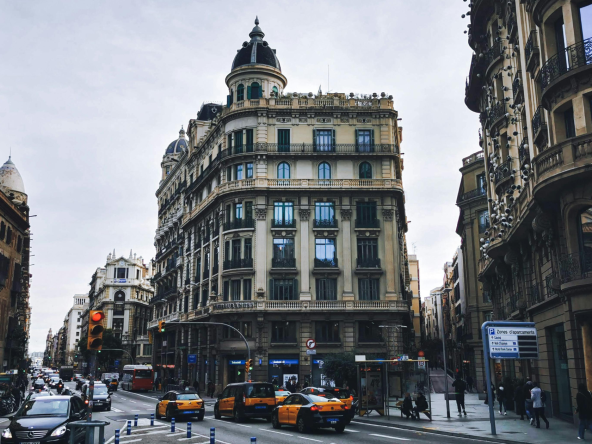
In Barcelona and its surrounding areas, examples such as the Circuit de Barcelona-Catalunya, major music festivals, and large sporting venues regularly attract visitors from around the world. This visibility can influence the image of nearby neighborhoods, sometimes positively and sometimes negatively.
The key point is that neighborhood perceived value is often influenced by lifestyle considerations as much as by traditional real estate factors.
Different Buyers, Different Perspectives
One of the most interesting aspects of neighborhood perceived value is that it is highly subjective.
The same neighborhood can be viewed very differently depending on the buyer.
Families
Families often prioritize peace, safety, schools, and everyday convenience. Some may view proximity to large venues as a disadvantage due to occasional disruptions.
Young Professionals
For younger buyers, living near entertainment and cultural events can be highly attractive. Easy access to concerts, sporting events, and nightlife may increase a neighborhood’s appeal.
Investors
Investors may focus less on occasional inconveniences and more on long-term demand, connectivity, and economic activity generated by major venues.
International Buyers
Many international buyers are attracted to neighborhoods with strong visibility and good infrastructure, particularly in globally recognized cities such as Barcelona.
Does Neighborhood Perceived Value Always Affect Property Prices?
Not necessarily.
One of the biggest misconceptions in real estate is that perception and market value are always the same thing.
A neighborhood may have a strong reputation and positive image without experiencing significant price increases. Conversely, some highly valued areas may not generate much attention despite strong market performance.
Property prices continue to be influenced primarily by:
- Location
- Supply and demand
- Housing availability
- Infrastructure
- Economic conditions
- Long-term urban development
However, neighborhood perceived value can influence buyer interest, demand patterns, and the speed at which properties attract attention.
In other words, perception may not directly determine price, but it can influence how buyers behave.
Finding the Right Balance
The impact of Formula 1 circuits, stadiums, and festivals on a neighborhood is rarely black and white.
For some residents, these venues create inconvenience. For others, they contribute to a vibrant atmosphere, improved infrastructure, and a stronger local economy.
The reality is that every buyer evaluates a neighborhood differently. What one person sees as a drawback, another may consider a unique advantage.
Understanding neighborhood perceived value means recognizing that real estate is not only about buildings—it is also about how people experience and interpret the places where they live.
At Maonlof, we believe that successful real estate decisions require looking beyond simple assumptions. Understanding both market fundamentals and buyer perception can provide a more complete picture of a property’s true potential.
Want to learn more about the factors shaping Barcelona’s real estate market? Follow our blog for insights on urban development, buyer behavior, and property trends.